Insider
New Experience
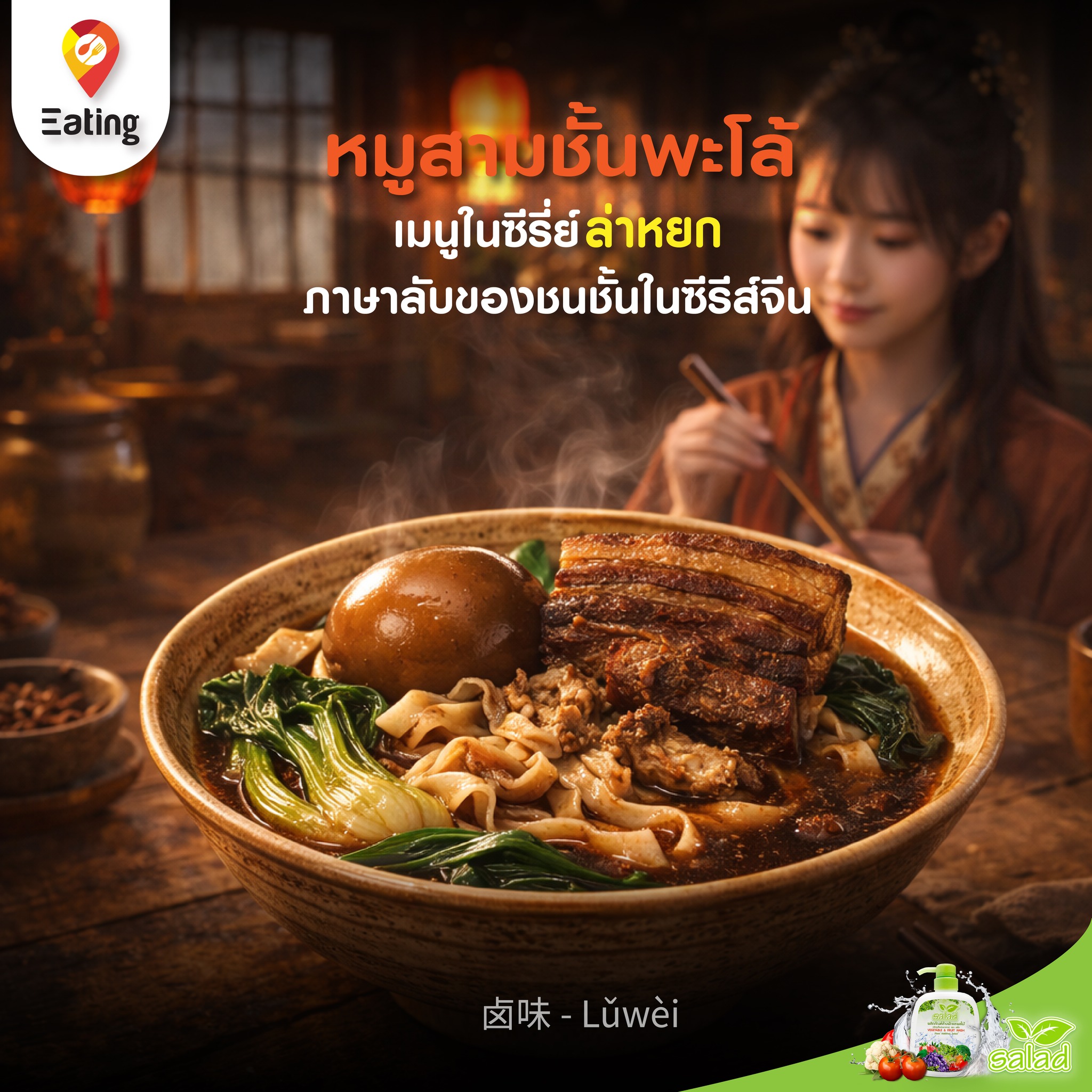
หมูสามชั้นพะโล้ เมนูในซีรี่ย์ล่าหยก ภาษาลับของชนชั้นในซีรีส์จีน
 หมูสามชั้นพะโล้ เมนูในซีรีส์ “ล่าหยก” ภาษาลับของชนชั้นในโลกจีนโบราณ
สังเกตไหมว่าในซีรีส์จีนย้อนยุคอย่าง “ล่าหยก” ฉากที่ดูเหมือนธรรมดาที่สุดอย่างการนั่งกินข้าว กลับมีบางอย่างซ่อนอยู่ โดยเฉพาะ “หมูพะโล้” ที่โผล่มาอยู่บนโต๊ะบ่อยครั้งเหมือนเป็นแค่อาหารบ้าน ๆ แต่แท้จริงแล้วมันคือ “ภาษาลับ”
.
ที่ผู้สร้างใช้เล่าเรื่องแทนคำพูด หมูพะโล้มีรากมาจากอาหารจีนโบราณประเภทตุ๋นซีอิ๊วอย่าง “หงเซาโร่ว” ซึ่งเป็นเมนูที่ใช้หมูสามชั้น เคี่ยวกับซีอิ๊ว เครื่องเทศอย่างโป๊ยกั๊ก อบเชย และน้ำตาลจนได้สีเข้มเงางาม กลิ่นหอมลึก และรสชาติที่ซึมเข้าไปถึงเนื้อใน ทุกขั้นตอนต้องใช้เวลาและความพิถีพิถัน จึงไม่ใช่อาหารที่ทำแบบลวก ๆ ได้
.
ในสังคมจีนยุคก่อน เนื้อหมูถือเป็นทรัพยากรที่มีค่า โดยเฉพาะหมูสามชั้นที่มีทั้งมันและเนื้อในสัดส่วนพอดี การจะมีเมนูนี้บนโต๊ะจึงไม่ได้เกิดขึ้นได้ทุกวัน แต่ต้องเป็นช่วงเวลาที่ “บ้านนั้นพอมีฐานะ” หรืออย่างน้อยก็มีความพร้อมมากพอที่จะใช้เวลาและวัตถุดิบไปกับอาหารจานหนึ่ง
.
ดังนั้นในโลกของซีรีส์ การที่ตัวละครได้กินหมูพะโล้ไม่ได้หมายถึงแค่ความอร่อย แต่กำลังบอกคนดูว่า “ชีวิตของเขาอยู่ในระดับไหน” หากเป็นฉากครอบครัวนั่งล้อมวงกินหมูพะโล้ มันคือภาพแทนของความอบอุ่น ความผูกพัน และความพยายามของคนในบ้านที่อยากมอบสิ่งดีที่สุดให้กัน แต่ถ้าหมูพะโล้ปรากฏในช่วงที่ตัวละครเริ่มมีชีวิตดีขึ้น มันก็ทำหน้าที่เป็นสัญญาณของการ “ขยับสถานะ” อย่างเงียบ ๆ โดยไม่ต้องมีบทพูดอธิบาย
.
ในอีกมุมหนึ่ง หมูพะโล้ยังสะท้อนวัฒนธรรมการกินของจีนที่ให้ความสำคัญกับการตุ๋น การรอคอย และความกลมกล่อม ซึ่งเป็นแนวคิดเดียวกับการใช้ชีวิตที่เน้นความอดทนและความสมดุล ซีรีส์อย่าง “ล่าหยก” จึงไม่ได้เลือกอาหารมาแบบสุ่ม แต่ใช้มันเป็นเครื่องมือสร้างบรรยากาศและเล่าเรื่องเชิงสัญลักษณ์
.
เมื่อกล้องแพนผ่านหม้อพะโล้ที่กำลังเดือดเบา ๆ หรือชิ้นหมูที่เรียงอยู่ในชาม มันกำลังพาคนดูย้อนกลับไปสู่ยุคที่อาหารหนึ่งจานสามารถบอกเล่าทั้งฐานะ ความสัมพันธ์ และจังหวะชีวิตของตัวละครได้อย่างลึกซึ้ง หมูพะโล้จึงไม่ใช่แค่เมนูในเรื่อง แต่คือรหัสทางวัฒนธรรมที่ซ่อนอยู่ในรายละเอียดเล็ก ๆ และยิ่งเรามองเห็นมัน เราก็จะยิ่งเข้าใจโลกของซีรีส์จีนได้มากขึ้นโดยไม่ต้องมีใครอธิบายเลย

Braised Pork Belly (Palo) in the series “The Legend of Jade” — The unspoken language of class in ancient Chinese society
.
Have you ever noticed that in Chinese historical dramas like The Legend of Jade, even the simplest scenes—like people sitting down to eat—often carry hidden meanings? One dish that frequently appears on the table is braised pork (palo). At first glance, it may seem like an ordinary home-cooked meal, but in reality, it functions as a kind of “unspoken language” used by the creators to tell the story without words.
.
This dish traces its roots back to traditional Chinese soy-braised pork, similar to hong shao rou, which is made by slowly simmering pork belly with soy sauce, spices such as star anise and cinnamon, and sugar until it develops a rich, glossy color, a deep aroma, and a flavor that penetrates every layer of the meat. The process requires time, patience, and careful attention, making it far from a casually prepared dish.
.
In ancient Chinese society, pork was considered a valuable resource—especially pork belly, prized for its perfect balance of fat and meat. Having this dish on the table was not an everyday occurrence; it usually signified that the household had a certain level of means, or at least enough resources to dedicate time and ingredients to such a meal.
.
Therefore, within the world of the series, when characters are shown eating braised pork, it is not merely about enjoying food—it subtly reveals their social standing. A scene where a family gathers around a table sharing braised pork symbolizes warmth, connection, and the effort to provide the best for one another. On the other hand, when the dish appears at a moment when a character’s life is improving, it quietly signals a shift in status—without the need for explicit dialogue.
.
From another perspective, braised pork also reflects Chinese culinary philosophy, which values slow cooking, patience, and harmony of flavors—principles that mirror a way of life centered on endurance and balance. In this sense, series like The Legend of Jade do not choose food at random; they use it as a storytelling device to build atmosphere and convey deeper meaning.
.
When the camera lingers on a pot of braised pork gently simmering, or on neatly arranged slices of meat in a bowl, it transports the audience back to a time when a single dish could express social status, relationships, and the rhythm of life. Braised pork, therefore, is not just a meal within the story—it is a cultural code hidden in plain sight. And once you begin to notice it, you start to understand the world of Chinese dramas on a much deeper level—without a single word needing to be said