Insider
New Experience
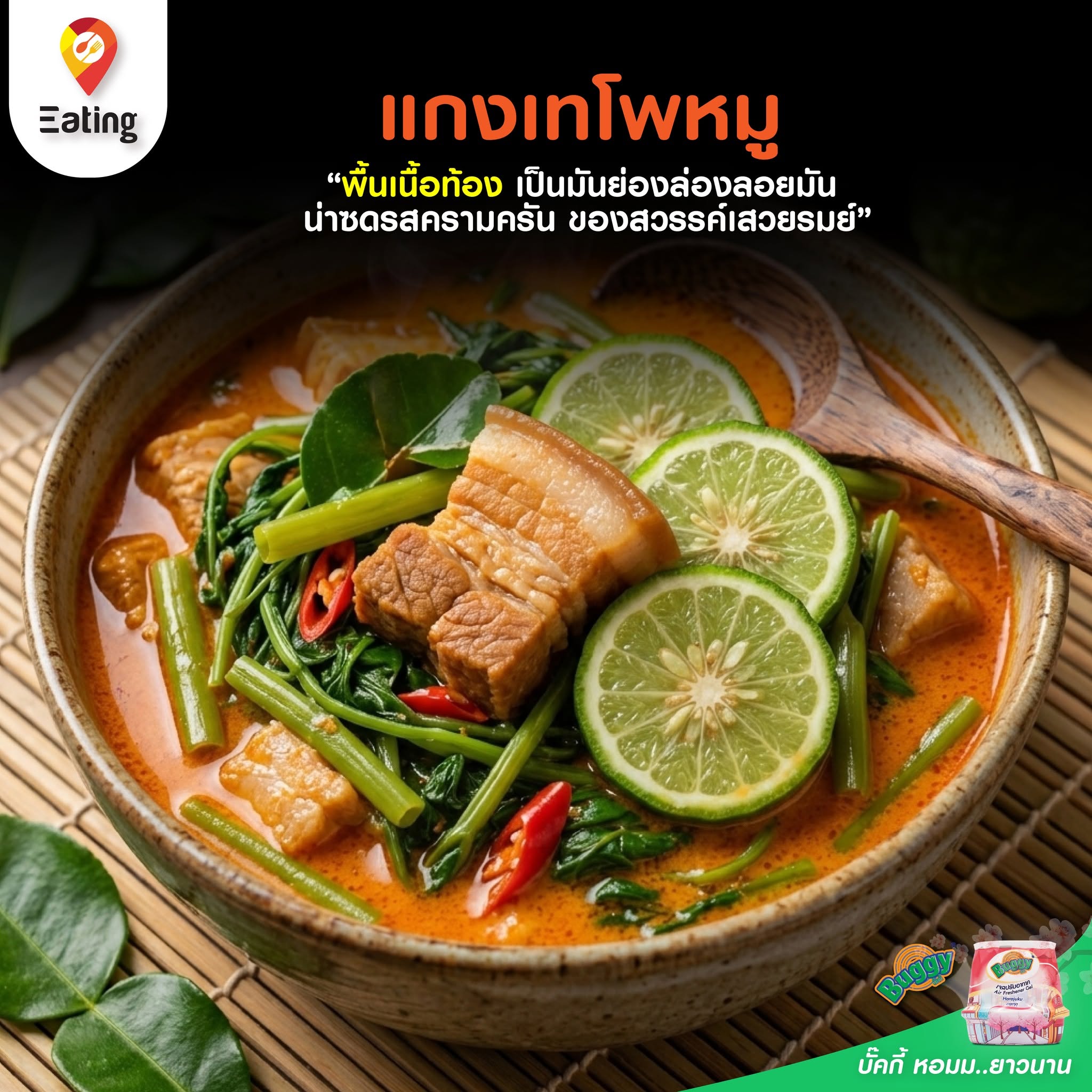
แกงเทโพหมู
“พื้นเนื้อท้อง เป็นมันย่องล่องลอยมัน น่าซดรสครามครัน ของสวรรค์เสวยรมย์”
หากพูดถึงแกงกะทิรสชาติกลมกล่อม มีครบทั้งเปรี้ยว เค็ม หวาน แถมพ่วงด้วยกลิ่นหอมสดชื่นอันเป็นเอกลักษณ์ ภาพของ “แกงเทโพ” สีส้มอมแดงประกายมันกะทิ พร้อมยอดผักบุ้งไทยสีเขียวสดคงลอยมาในหัวของใครหลายคน แต่รู้หรือไม่ว่าแกงรสเลิศถ้วยนี้มีเดินทางผ่านประวัติศาสตร์มาไกลกว่า 200 ปี และชื่อ “เทโพ” ที่เราเรียกกันทุกวันนี้แท้จริงแล้วไม่ใช่ชื่อหมูสามชั้น!
.
1. จุดกำเนิดในราชสำนักแกงส้มคั่วปลาเทโพ
ย้อนกลับไปในสมัยรัตนโกสินทร์ตอนต้น เมนูนี้ไม่ได้ใช้หมูสามชั้นอย่างในปัจจุบัน แต่ใช้ “ปลาเทโพ” ปลาน้ำจืดตระกูลเดียวกับปลาสวาย ซึ่งขึ้นชื่อเรื่องเนื้อที่นุ่มและมีมันเคลบผิวหนาหนำใจ โดยเฉพาะส่วนท้อง (พุงปลา) ที่เมื่อนำมาแกงแล้ว มันปลาจะแทรกซึมเข้ากับน้ำกะทิได้อย่างลงตัว
.
หลักฐานชิ้นสำคัญที่บันทึกความอร่อยนี้ไว้คือ กาพย์เห่ชมเครื่องคาวหวาน พระราชนิพนธ์ในพระบาทสมเด็จพระพุทธเลิศหล้านภาลัย (รัชกาลที่ 2) ที่ทรงพรรณนาไว้ว่า
เทโพแกงส้มคั่ว / เปล่ากระดี่กลัวซ่อนตัวหน้า
ผักบุ้งไส้โครงฝ่า / ดั่งเหลือดื้อกระดี่นาง
.
2. ยุคผลัดใบ เมื่อปลาหายหน้า หมูสามชั้นจึงมารับไม้ต่อ
เมื่อยุคสมัยเปลี่ยนไป ปลาเทโพตามแหล่งน้ำธรรมชาติเริ่มหากินได้ยากขึ้น ประกอบกับเนื้อปลามีกลิ่นคาวเฉพาะตัวที่หากปรุงไม่เชี่ยวชาญอาจเสียรสชาติได้ง่าย แม่ครัวยุคหลังจึงเกิดไอเดียสร้างสรรค์ โดยการนำ “หมูสามชั้น” มาใช้แทน
.
ทำไมต้องหมูสามชั้น?
เพราะหมูสามชั้นมีชั้นเนื้อสลับมันที่ให้ความนุ่ม หนึบ และความมันละมุนคล้ายคลึงกับส่วนท้องของปลาเทโพโบราณเมื่อเคี่ยวจนเข้าเนื้อนั่นเอง แม้ว่าวัตถุดิบหลักจะเปลี่ยนจาก "ปลา" เป็น "หมู" ไปอย่างสิ้นเชิง แต่คนไทยก็ยังคงเรียกเมนูนี้ว่า “แกงเทโพ” เพื่อระลึกถึงต้นตำรับเดิมจนกลายเป็นชื่อติดปากมาถึงปัจจุบัน
.
3. เอกลักษณ์ 3 สิ่ง ที่ขาดไม่ได้ในหม้อแกงเทโพ
เสน่ห์ที่ทำให้แกงเทโพแตกต่างจากแกงคั่วทั่วไป และยังคงมัดใจคนทานได้ทุกยุค คือการรวมตัวของ 3 วัตถุดิบหลัก พริกแกงคั่วรสจัดจ้านผัดกับหัวกะทิจนแตกมันเป็นเงาสวย ผักบุ้งไทยก้านโตต้องใช้ผักบุ้งไทย (ผักบุ้งแก้ว) นำมาทุบพอแตกเพื่อให้ก้านโปร่ง สามารถดักและดูดซึมน้ำแกงรสเข้มข้นเข้าไว้ข้างในได้อย่างเต็มคำ
.
ลูกมะกรูดผ่าซีกนี่คือทีเด็ด! การใส่ลูกมะกรูดลงไปเคี่ยวพร้อมแกง จะช่วยตัดความเลี่ยนของกะทิและหมูสามชั้น มอบรสเปรี้ยวอมขมกลมกล่อม พร้อมกลิ่นน้ำมันหอมระเหยจากผิวมะกรูดที่โชยขึ้นมาทันทีที่ตักทาน
.
จากแกงปลาในกาพย์เห่ชมเครื่องคาวหวาน สู่แกงหมูสามชั้นบนโต๊ะอาหารในบ้าน "แกงเทโพ" ไม่เพียงแต่เป็นเมนูที่อร่อยครบรส แต่ยังเป็นประจักษ์ตรรกะแห่งความชาญฉลาดของศาสตร์ครัวไทย ที่รู้จักปรับเปลี่ยนและประยุกต์วัตถุดิบตามกาลเวลา โดยไม่สูญเสียอัตลักษณ์ความอร่อยดั้งเดิมไปเลยแม้แต่น้อย
Unveiling the Legend of "Gaeng Tay Po": From a Royal Recipe to a Modern Kitchen Favorite
When it comes to a perfectly balanced Thai coconut curry—boasting a harmonious blend of sour, salty, and sweet, topped with a refreshingly unique aroma—many immediately picture "Gaeng Tay Po." Its vibrant reddish-orange hue, glistening with coconut oil and paired with bright green Thai water spinach, is unforgettable. But did you know that this delectable dish has journeyed through over 200 years of history? And surprise—the name "Tay Po" doesn’t actually refer to the pork belly we eat today!
.
1. Royal Origins: Gaeng Som Khua Pla Tay Po
Back in the early Rattanakosin era, this dish was not made with pork belly. Instead, it featured "Pla Tay Po" (Black-eared catfish), a freshwater fish in the same family as the iridescent shark. It was highly prized for its tender texture and rich, fatty belly. When simmered, the fish fat would melt beautifully into the coconut milk broth.
.
A crucial historical record of this culinary masterpiece is found in the "Kap He Chom Khrueang Khao Wan" (Boat Song Admiring Savory and Sweet Dishes), a famous royal poem penned by King Rama II, which translates to:
.
"The sour and savory curry of Tay Po fish / leaves the Kra-di fish hiding in fear.
The stuffed stems of water spinach / look as striking as the stripes on the Kra-di Nang fish."
.
During that period, the dish was known as "Gaeng Som Khua Pla Tay Po," a brilliant culinary fusion that took the bold, zesty flavors of sour curry paste and gently simmered them with rich coconut milk.
.
2. The Era of Transition: When Fish Faded and Pork Belly Stepped In
As time passed, wild Pla Tay Po became increasingly scarce. Furthermore, the fish possessed a distinct, muddy aroma that could easily ruin the dish if not prepared by a master cook. Consequently, later generations of Thai home cooks came up with a creative twist: substituting the fish with "pork belly."
.
Why pork belly?
Pork belly features alternating layers of meat and fat that perfectly mimic the tender, melt-in-your-mouth texture of the traditional Tay Po fish belly when slow-cooked in the curry.
.
Even though the main ingredient completely shifted from fish to pork, Thais continued to call the dish "Gaeng Tay Po" to honor its original roots, a name that remains a household staple to this day.
.
3. The Holy Trinity of Gaeng Tay Po
What sets Gaeng Tay Po apart from standard red curries and keeps food lovers hooked across generations is the irreplaceable combination of three key elements:
.
Robust Curry Paste: Stir-fried with thick coconut cream until it splits and creates a beautiful, glossy sheen on the surface.
.
Crushed Thai Water Spinach: It is essential to use Thai water spinach (Phak Bung Kaeo). The thick stems are lightly bruised before cooking, making them hollow and porous—perfect for trapping and soaking up the rich, flavorful curry in every single bite.
.
Halved Kaffir Lime Fruits: This is the ultimate secret weapon! Simmering whole kaffir lime halves directly in the curry cuts through the richness of the coconut milk and pork belly. It infuses the broth with a subtle citrusy tang and releases essential oils from the rind, yielding an irresistible aroma the moment the dish is served.
.
From a royal fish curry celebrated in classic literature to a comforting pork belly dish on today’s dinner tables, "Gaeng Tay Po" is more than just a delicious, well-rounded meal. It stands as a delicious testament to the ingenuity of Thai cuisine—proving an innate ability to adapt and evolve with the times without ever losing its soulful, time-honored essence.