Loading...
Insider
New Experience
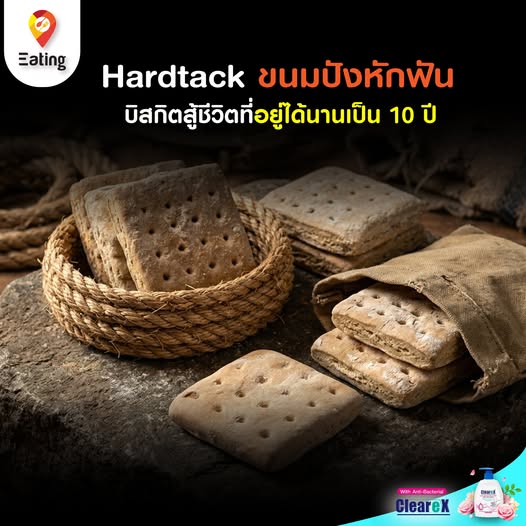
Hardtack ขนมปังหักฟัน
บิสกิตสู้ชีวิต ที่อยู่ได้นานเป็น 10 ปี
Hardtack หรือที่บางคนเรียกว่า "ขนมปังหักฟัน"
Hardtack (ฮาร์ดแท็ก) ไม่ได้เป็นเพียงแค่ขนมปัง แต่มันคือ "อาหารเพื่อความอยู่รอด" ที่มีบทบาทสำคัญอย่างยิ่งในประวัติศาสตร์ของมนุษย์ โดยเฉพาะในช่วงที่การเก็บรักษาอาหารยังเป็นเรื่องยากลำบาก
.
คำว่า "Hardtack" มาจากคำภาษาอังกฤษสองคำ: "Hard" (แข็ง) และ "Tack" (คำแสลงสำหรับ "อาหาร" ในภาษาพูดของกะลาสีเรือ) ส่วนผสมของมันนั้นง่ายอย่างไม่น่าเชื่อ มีเพียงแป้งสาลี,น้ำ,และเกลือ ด้วยส่วนผสมเพียงเท่านี้ Hardtack จึงมีไขมันและน้ำตาลต่ำมาก ซึ่งหมายความว่ามันจะ ไม่เน่าเสีย ได้ง่ายๆ มันจึงเป็นอาหารที่เก็บไว้ได้นานหลายเดือนหรือนานหลายปี
.
ในช่วงศตวรรษที่ 15-18 ที่กะลาสีเรือต้องออกเดินทางไกลเป็นเวลาหลายเดือน HARDTACK กลายเป็นอาหารหลักที่ขาดไม่ได้ มันเบา, พกพาสะดวก, และไม่เน่าเสียในสภาพอากาศที่ชื้นและร้อนบนเรือ อย่างไรก็ตาม กะลาสีมักจะเบื่อหน่ายกับรสชาติที่จืดชืดและความแข็งของมัน จึงมีตำนานเล่าว่า กะลาสีบางคนถึงกับนำ Hardtack มาสลักเป็นงานศิลปะแก้เบื่อ
.
ช่วงเวลาที่ Hardtack มีชื่อเสียงโด่งดังที่สุด ทหารทั้งฝ่ายเหนือและฝ่ายใต้ต้องพึ่งพา HARDTACK เป็นอาหารหลักในสนามรบ ด้วยความที่มันแข็งมาก ทหารมักจะนำมันไปแช่น้ำหรือกาแฟให้พองตัวก่อนรับประทาน หรือบางครั้งก็นำไปผัดกับน้ำมันพืชเพื่อเพิ่มรสชาติ ถึงแม้จะมีเรื่องเล่าถึงความลำบากในการกิน แต่ Hardtack ก็เป็นสิ่งที่ช่วยให้ทหารรอดชีวิตจากการอดอยากในหลายสมรภูมิ
.
มันอาจจะไม่ใช่ขนมปังที่อร่อยที่สุด แข็งที่สุด และท้าทายฟันที่สุด แต่ความสามารถในการเก็บรักษาและความเป็นอาหารเพื่อความอยู่รอด ทำให้มันเป็นหนึ่งในอาหารที่มีความสำคัญอย่างยิ่งในประวัติศาสตร์
Hardtack, often referred to by some as "tooth-duller bread."
Hardtack is far more than just ordinary bread—it is a vital "survival food" that played a monumental role in human history, especially during eras when food preservation was a formidable challenge.
.
The name "Hardtack" comes from two English words: "Hard" and "Tack" (a sailor’s slang term for food). Its recipe is astoundingly simple, consisting of nothing more than wheat flour, water, and salt. With such minimal ingredients, Hardtack contains virtually no fat or sugar, meaning it will not easily spoil. As a result, it could be preserved for months, or even years.
.
From the 15th to the 18th centuries, as sailors embarked on long ocean voyages lasting many months, HARDTACK became an indispensable staple. It was lightweight, highly portable, and resistant to spoilage even in the humid, tropical air aboard ships. However, sailors quickly grew weary of its bland taste and rock-hard texture. Legend has it that some sailors even carved pieces of Hardtack into artwork just to pass the time!
.
During its most famous era—the American Civil War—soldiers from both the Union and the Confederacy relied heavily on HARDTACK as a primary battlefield ration. Because it was so exceedingly hard, soldiers often soaked it in water or coffee to soften it before eating, or occasionally fried it in grease to add flavor. Despite endless tales of how difficult it was to consume, Hardtack saved countless soldiers from starvation across numerous battlefields.
.
It may not be the tastiest bread, but it is certainly among the hardest and most tooth-challenging. Yet, its incredible shelf life and status as the ultimate survival food make it one of the most historically significant foods in human history.