Insider
New Experience
มดโถน้ำผึ้ง ดูดท้องกินน้ำหวาน อาหารมีชีวิตจากทะเลทราย
 “มดโถน้ำผึ้ง” ของหวานมีชีวิตจากทะเลทราย
ถ้าพูดถึง “อาหารแปลก” หลายคนอาจนึกถึงแมลงทอดหรือของหมักดองสุดขั้ว แต่ที่ออสเตรเลียมีของหวานธรรมชาติชนิดหนึ่งที่ทั้งแปลกและน่าทึ่งก็คือมดโถน้ำผึ้ง
.
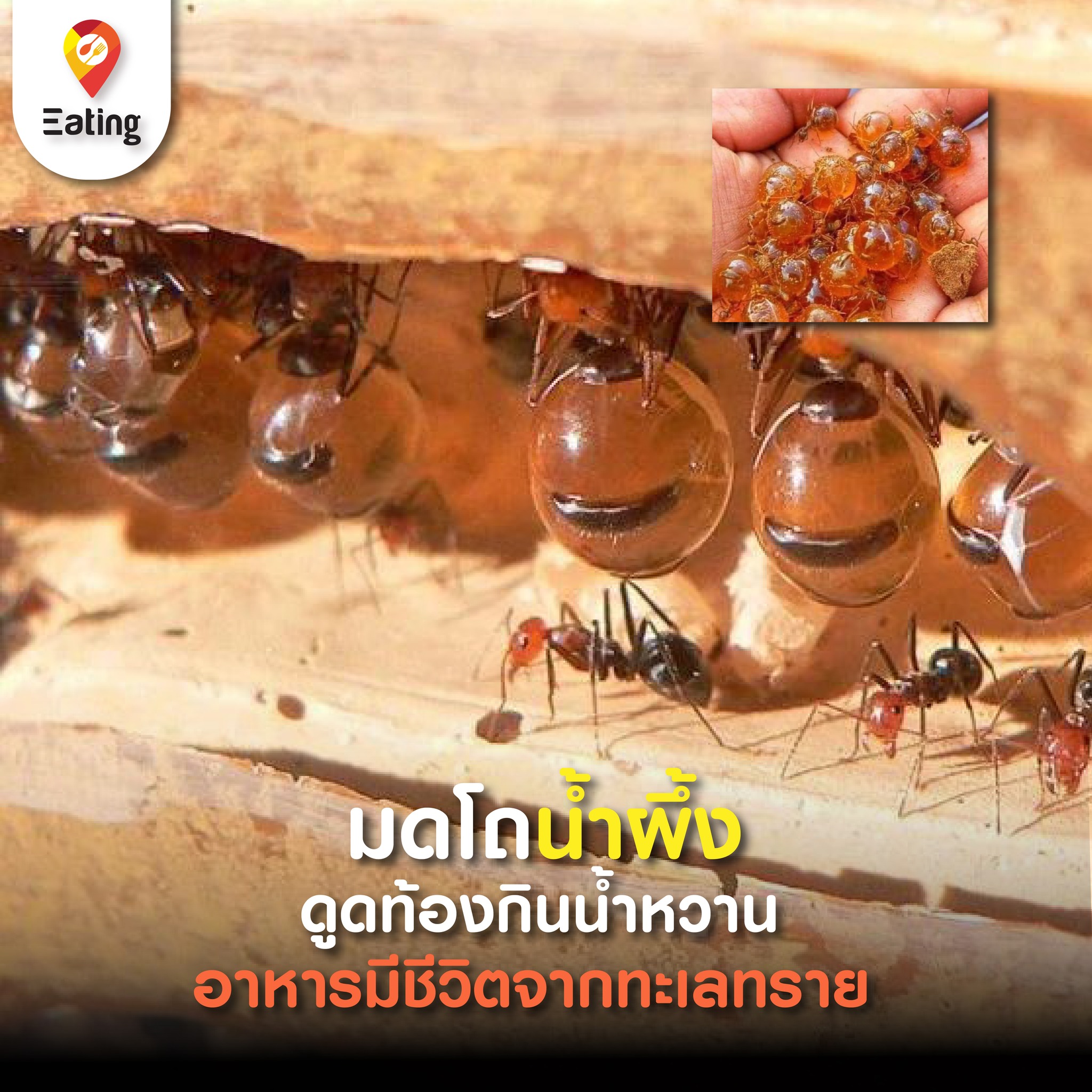
มดชนิดนี้อยู่ในสกุล Myrmecocystus โดยในหนึ่งรังจะมีมดบางตัวถูกเลือกให้ทำหน้าที่พิเศษ เรียกว่า “replete” หรือมดสะสมน้ำหวาน พวกมันจะกินน้ำหวานจากดอกไม้และของเหลวหวาน ๆ ที่มดงานนำมาป้อน จนท้องพองกลมใสราวกับลูกองุ่นสีอำพัน แล้วห้อยตัวนิ่ง ๆ อยู่ในรัง ทำหน้าที่เป็น “ตู้เย็นมีชีวิต” สำรองอาหารให้ทั้งอาณานิคมในช่วงแล้ง
.
ความพีคคือ สำหรับชนพื้นเมืองบางกลุ่มในออสเตรเลีย มดโถน้ำผึ้งถือเป็นของหวานจากธรรมชาติ เวลาขุดรังเจอ จะหยิบตัวที่ท้องพองมากินทั้งตัว รสชาติหวานละมุนคล้ายน้ำผึ้งป่า บางคนบอกว่าหอมคล้ายคาราเมลอ่อน ๆ เป็นพลังงานชั้นดีในพื้นที่ทะเลทรายที่อาหารหายาก
.
มดงานจะออกไปหา น้ำหวานจากดอกไม้ หรือน้ำหวานจากเพลี้ยอ่อน แล้วนำกลับมาป้อนให้มด repleteมด replete จะเก็บของเหลวไว้ใน “กระเพาะพัก” (social stomach) จนท้องขยายใหญ่หลายเท่าตัว บางตัวพองจนขยับแทบไม่ได้ และจะห้อยอยู่กับเพดานรัง
.
เมื่ออาหารขาดแคลน มดตัวอื่นจะมากระตุ้นให้มด replete “สำรอก” น้ำหวานออกมาแบ่งกันกินท้องพองกลมโตมาก ใหญ่กว่าลำตัวหลายเท่า สีท้องมัก ใสหรือออกอำพัน เพราะเต็มไปด้วยน้ำหวาน ผิวท้องยืดจนเงาวาว ดูเหมือนลูกองุ่นหรือลูกบอลใส ๆ ตัวมันแทบไม่เดิน เพราะจะ ห้อยอยู่กับเพดานรัง ทำหน้าที่เก็บอาหาร
.
ถ้าเป็นมดงานธรรมดา จะดูปกติ ไม่พอง ไม่ใส แต่พอเห็นตัว replete ครั้งแรก หลายคนจะอึ้ง เพราะมันดูเหมือน “มดที่กลืนลูกแก้วเข้าไปทั้งลูก”
“Honeypot Ants” — Living Dessert from the Desert
When people think of “exotic food,” they often imagine deep-fried insects or extreme fermented dishes. But in Australia, there is a natural sweet treat that is both unusual and fascinating — the honeypot ant.
.
This species belongs to the genus Myrmecocystus. Within a single colony, certain ants are selected for a special role called “repletes,” or nectar-storing ants. They are fed nectar collected by worker ants from flowers or sweet secretions produced by aphids. Over time, their abdomens swell into round, translucent, amber-like spheres — almost like tiny grapes. They hang motionless from the ceiling of the nest, acting as “living refrigerators” that store food for the colony during dry seasons.
.
What makes this even more remarkable is that some Indigenous Australian communities have traditionally harvested honeypot ants as a natural dessert. When they dig up a nest, they select the swollen repletes and eat them whole. The taste is described as mildly sweet, similar to wild honey, with hints of light caramel. In harsh desert environments where sugar sources are scarce, these ants provide valuable energy.
.
Worker ants gather nectar from flowers or honeydew from aphids and feed it to the repletes. The liquid is stored in a specialized “social stomach,” allowing the abdomen to expand many times its normal size. Some become so engorged that they can barely move and remain suspended from the nest ceiling.
.
When food becomes scarce, other ants gently stimulate the repletes to regurgitate the stored nectar, sharing it throughout the colony. Their swollen abdomens can grow much larger than their bodies, often translucent or amber in color, stretched and glossy like tiny glass marbles. Unlike regular worker ants, which look completely normal, a replete can be shocking to see for the first time — almost like an ant that swallowed a bead.