Loading...
Insider
New Experience
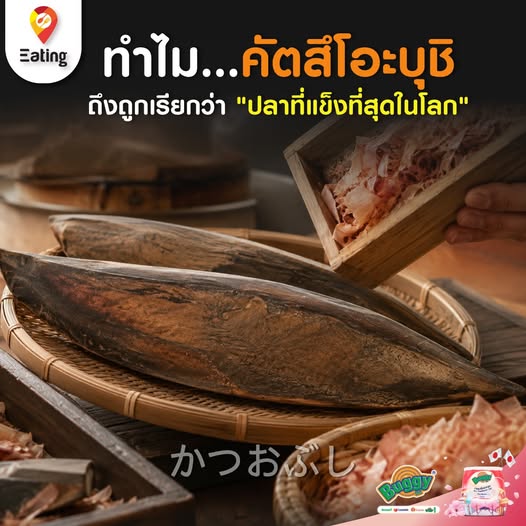
ทำไม...คัตสึโอะบุชิ
ถึงถูกเรียกว่า "ปลาที่แข็งที่สุดในโลก"?
 ทำไม "คัตสึโอะบุชิ (Katsuobushi)" ถึงถูกเรียกว่า "ปลาที่แข็งที่สุดในโลก"?
หลายคนคงเคยเห็นแผ่นปลาแห้งสีชมพูบางๆ ที่โรยบนทาโกะยากิ โอโคโนมิยากิ หรือใส่ในน้ำซุปญี่ปุ่น
แต่รู้หรือไม่ว่า...ก่อนจะกลายเป็นแผ่นบางๆ นั้น
คัตสึโอะบุชิแข็งมากจนต้องใช้เครื่องไสโดยเฉพาะ เพราะไม่สามารถหั่นด้วยมีดทั่วไปได้
ความแข็งนี้เกิดจากกระบวนการผลิตแบบดั้งเดิมของญี่ปุ่นที่ใช้เวลาหลายเดือน โดยเริ่มจาก
ต้มปลาโอ → รมควันซ้ำหลายครั้ง → นำไปบ่มด้วยเชื้อราที่มีประโยชน์ → ตากแห้งหลายรอบกระบวนการนี้ช่วยดึงความชื้นออกจากเนื้อปลาเกือบทั้งหมด จนเหลือความชื้นเพียงประมาณ 10–15%
ทำให้เนื้อปลาแข็งมากและสามารถเก็บได้นาน
นอกจากจะเก็บรักษาได้นานแล้ว การบ่มยังช่วยเพิ่มสาร อูมามิ (Umami) โดยเฉพาะ อิโนซิเนต (Inosinate) ซึ่งเป็นเหตุผลที่ทำให้คัตสึโอะบุชิเป็นหัวใจสำคัญของน้ำซุป ดาชิ (Dashi)
และเป็นหนึ่งในรสชาติเอกลักษณ์ของอาหารญี่ปุ่น
Why Is Katsuobushi Called “the Hardest Fish in the World”?Many people have probably seen those thin, pinkish flakes of dried fish sprinkled over takoyaki and okonomiyaki, or used to make Japanese soup stock.
But did you know that… before it becomes those delicate flakes, katsuobushi is so hard that it requires a special shaving tool because it cannot be sliced with an ordinary knife?
This incredible hardness comes from a traditional Japanese production process that takes several months.
It begins with:
Boiling the bonito → repeatedly smoking it → aging it with beneficial mold → drying it several timesThis process removes almost all of the moisture from the fish, leaving only around 10–15% moisture. As a result, the fish becomes extremely hard and can be stored for a long time.
In addition to extending its shelf life, the aging process also enhances its umami flavor, particularly through inosinate (inosine monophosphate).
That is why katsuobushi is a key ingredient in dashi, the essential Japanese soup stock, and one of the distinctive flavors of Japanese cuisine.