Loading...
Insider
New Experience
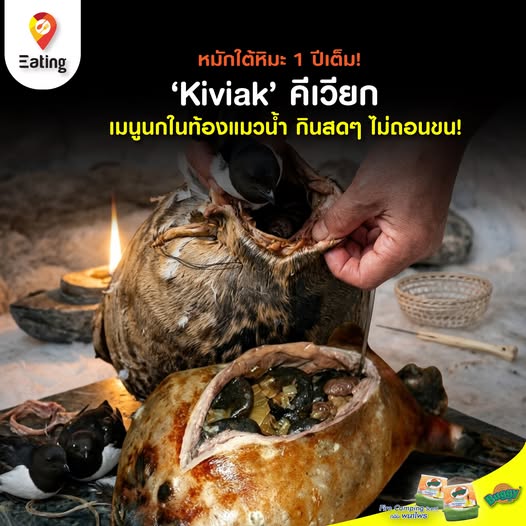
Kiviak (คีเวียก)
เมนูนกในท้องแมวน้ำ กินสดๆไม่ถอนขน!
Kiviak (คีเวียก) คือหนึ่งในเมนูถนอมอาหารที่เอ็กซ์ตรีมที่สุดในโลกของชาวอินูอิต (Inuit) ในกรีนแลนด์ มันไม่ใช่แค่เรื่องของความแปลก แต่คือ “วิชาเอาชีวิตรอด” ในดินแดนที่ไม่มีพืชผักขึ้นเลยตลอดฤดูหนาวอันยาวนาน
เมนูนี้นิยมทำช่วงปลายฤดูร้อนต่อต้นฤดูใบไม้ร่วง (ช่วงเดือนมิถุนายน–สิงหาคม) เท่านั้น เพราะเป็นช่วงที่นกอ็อก (Little Auk) บินอพยพมาเกาะตามหน้าผานับล้านตัว และแมวน้ำก็ชุกชุมที่สุด เป็นช่วงเวลาเดียวที่วัตถุดิบสมบูรณ์พร้อม
ช่วงเวลาที่นำมากินนำออกมาขุดกินในช่วง ฤดูหนาวอันยาวนาน (ประมาณเดือนกุมภาพันธ์–มีนาคม) หรือช่วงที่หิมะตกหนักจนไม่สามารถออกล่าสัตว์อื่นได้ และไม่ได้ทำกินตลอดทั้งปี เพราะทำได้เฉพาะช่วงฤดูร้อน และกินเฉพาะช่วงฤดูหนาวที่ขาดแคลนอาหาร หรือกินตามโอกาสพิเศษเท่านั้น
รสชาติและเนื้อสัมผัส ของ Kiviak ถือเป็นเอกลักษณ์ที่ตลบแตลงและสุดขั้วมาก เพราะเกิดจากการหมักด้วยเอนไซม์ธรรมชาติในท้องแมวน้ำเป็นเวลาหลายเดือน เค็มจัด เข้มข้น นัว และมีความอูมามิแบบเนื้อสัตว์หมัก
หลายคนอธิบายว่ารสชาติคล้าย Blue Cheese (บลูชีส) หรือ Gouda Cheese ที่ผ่านการบ่มนานๆ จนรสชาติเข้มข้น รุนแรง และมีโน้ตของความฉุนแบบแอมโมเนีย มีรสคาวปลาผสมคาวเลือดเนื้อสัตว์อย่างชัดเจน เนื่องจากนกอ็อกกินสัตว์ทะเลเป็นอาหาร บวกกับน้ำมันแมวน้ำที่ซึมเข้าเนื้อตลอดหลายเดือน
เนื้อนกนุ่มเปื่อยจนแทบไม่ต้องเคี้ยว เอนไซม์ย่อยจนเนื้อนกนิ่มเกือบกลายเป็นปาเต้ (Pâté) หรือเนื้อบดละเอียด ไขมันและเครื่องใน ส่วนของตับและเครื่องในจะกลายเป็นของเหลวหนืดๆ คล้ายครีมซอส สามารถใช้หลอดหรือปากดูดออกมาจากตัวนกได้ทันที
บริบทปัจจุบันกลายเป็น "อาหารในโอกาสพิเศษและเทศกาลสำคัญ" เช่น งานแต่งงาน งานวันเกิด ต้อนรับวันปีใหม่ หรือวันเฉลิมฉลองการกลับมาของพระอาทิตย์ขึ้นครั้งแรกหลังฤดูหนาวอันยาวนาน
Kiviak is one of the most extreme food preservation dishes in the world, originating from the Inuit people of Greenland. It is not merely about eccentricity, but rather a vital "survival skill" in a land where no vegetation grows throughout the long winter months.
This dish is typically prepared only during the late summer to early autumn season (June to August). This is when millions of Little Auks migrate to nest on the cliffs and seals are most abundant, making it the sole time of year when both key ingredients are available.
The fermented seals are dug up and consumed during the harsh, prolonged winter (around February to March) or when heavy snowstorms prevent hunting for other wild game. It is not eaten year-round, as preparation is strictly seasonal; it is reserved for periods of winter food scarcity or special celebrations.
The taste and texture of Kiviak are uniquely intense and extreme, created through months of natural enzyme fermentation inside a seal's belly. It is sharply salty, rich, deeply savory, and packed with cured-meat umami.
Many describe its flavor as similar to an aged Blue Cheese or extra-matured Gouda, featuring a strong, pungent aroma with subtle ammonia notes. It carries a distinct fishy undertone mixed with the iron-rich taste of game meat, as Little Auks feed on marine life and the bird meat is continuously infused with seal oil over time.
The bird meat becomes so extraordinarily tender that it barely requires chewing, as the enzymes soften the flesh to a paste-like pâté consistency. The fat, liver, and internal organs liquefy into a thick, creamy texture that can be sucked directly from the bird.
Today, Kiviak has evolved into a "delicacy for special occasions and major festivals," such as weddings, birthdays, New Year celebrations, or the return of the first sunrise after the long polar night.