Insider
New Experience
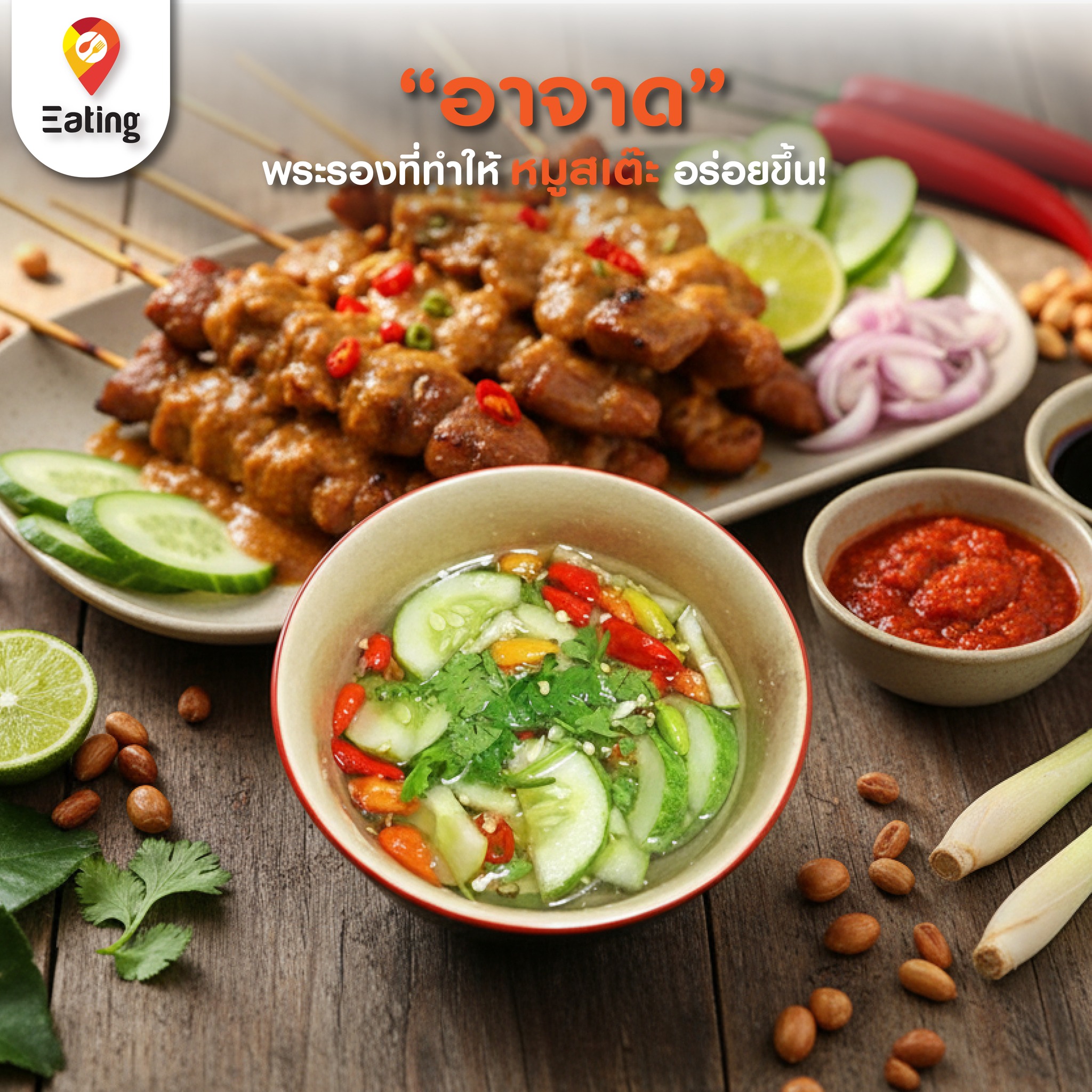
"อาจาด"
พระรองที่ทำให้หมูสเต๊ะอร่อยขึ้น!
"อาจาด" เครื่องเคียงเล็ก ๆ เสริมให้เมนูหลักอร่อยลงตัว
หากพูดถึง “หมูสเต๊ะ” ภาพที่หลายคนนึกออกคงไม่ใช่แค่ไม้หมูย่างหมักกะทิหอม ๆ หรือถ้วยน้ำจิ้มถั่วเข้มข้นเท่านั้น แต่ยังมีถ้วยเล็ก ๆ อีกใบหนึ่งวางเคียงข้าง ที่เต็มไปด้วยแตงกวา หอมแดง และพริกชี้ฟ้าแช่อยู่ในน้ำดองใส ๆ หวานอมเปรี้ยว เครื่องเคียงชิ้นเล็กนั้นคือ “อาจาด” ที่หลายคนอาจเผลอลืมไปว่าแท้จริงแล้วมันมีบทบาทสำคัญมากกว่าที่คิด
.
จาก “Acar” สู่ “อาจาด”
คำว่า “อาจาด” มีรากมาจาก Acar ของชาวมลายูและชวา หมายถึงผักดองในน้ำส้มสายชู ปรุงรสหวาน เปรี้ยว เค็มเล็กน้อย นิยมกินแนมกับอาหารมัน ๆ หรือของย่าง เช่น ข้าวมันไก่ทอดหรืออาหารริมทางในแถบอินโดนีเซียและมาเลเซีย
.
เมื่อสเต๊ะเดินทางเข้ามาในสยามในช่วงปลายสมัยรัชกาลที่ 5 ร่วมกับวัฒนธรรมอาหารของชาวจีนและมลายู “Acar” ก็เดินทางมาด้วย แต่ด้วยรสนิยมแบบไทย ๆ ที่มักชอบรสหวานนำ อาจาดจึงถูกปรับสูตรให้น้ำดองออกหวานหอมกว่าเดิม และกลายเป็นเครื่องเคียงเฉพาะตัวของสเต๊ะในแบบไทย
.
ตัดเลี่ยน เติมสดชื่น หลายคนอาจสงสัยว่า ทำไมต้องมีอาจาดเสิร์ฟคู่สเต๊ะ? คำตอบอยู่ที่ “สมดุล” ของรสชาติ หมูสเต๊ะหมักกะทิและเครื่องเทศ ย่างจนหอม มัน และเข้มข้น น้ำจิ้มถั่วรสหวานเค็มมัน ยิ่งเพิ่มความหนักแน่น
.
อาจาดด้วยแตงกวากรอบ ๆ หอมแดงหอม ๆ และน้ำดองเปรี้ยวหวานสดชื่น ช่วยตัดเลี่ยน ทำให้ทุกคำของสเต๊ะกินง่ายขึ้น จะว่าไป อาจาดก็ไม่ต่างอะไรกับนักดนตรีประกอบที่คอยส่งให้พระเอกบนเวทีโดดเด่นขึ้นมา ไม่ได้มีดีแค่คู่สเต๊ะ
.
แม้จะขึ้นชื่อว่าเป็น “คู่แท้ของหมูสเต๊ะ” แต่อาจาดก็อร่อยเมื่อนำไปกินกับอาหารอื่นเช่นกัน ไม่ว่าจะเป็นของทอดอย่างปอเปี๊ยะทอด ไก่ทอด หรือแม้กระทั่งของย่างแบบไทย ๆ ก็เข้ากันได้ เพราะรสเปรี้ยวหวานเบา ๆ ทำหน้าที่ “ล้างปาก” และคืนความสดชื่นเสมอ
.
เครื่องเคียงที่กลายเป็นเอกลักษณ์
ทุกวันนี้ หากไปสั่งหมูสเต๊ะที่มาเลเซียหรืออินโดนีเซีย จะเจอแค่น้ำจิ้มถั่ว แต่ถ้ามาไทย จะเจออาจาดวางเคียงมาด้วยเสมอ จนกลายเป็นลายเซ็นหนึ่งของอาหารไทยที่สะท้อนให้เห็นว่า คนไทยไม่เพียงรับอิทธิพลจากอาหารต่างแดน แต่ยังรู้จักดัดแปลง ปรับแต่ง และสร้าง “รสใหม่” ให้เข้ากับวัฒนธรรมการกินของตนเองได้อย่างกลมกล่อม
.
ครั้งหน้า หากคุณตักอาจาดขึ้นมาพร้อมหมูสเต๊ะ อย่ามองมันเป็นแค่ผักดองใส่น้ำส้มธรรมดา แต่ให้รู้ไว้ว่า อาจาดคือภูมิปัญญาการกิน ที่เล็กแต่ยิ่งใหญ่ในวัฒนธรรมอาหารไทย
“Ajaad”: A Small Side Dish that Perfectly Complements the Main Course
When we think of moo satay (Thai pork satay), what comes to mind is not only the skewers of pork marinated in coconut milk and spices or the rich, nutty peanut sauce. There is also a small bowl set alongside, filled with cucumber, shallots, and chili soaking in a sweet-and-sour brine. This little side dish is “Ajaad”, often overlooked, yet it plays a far more important role than many might realize.
From Acar to Ajaad
The word Ajaad comes from Acar, a Malay and Javanese term for pickled vegetables in vinegar, typically flavored with sweet, sour, and slightly salty notes. It is commonly eaten as an accompaniment to greasy or grilled foods—like fried chicken rice or various street foods in Indonesia and Malaysia.
When satay made its way into Siam in the late reign of King Rama V, together with Chinese and Malay culinary influences, Acar arrived as well. But with the Thai palate favoring sweeter flavors, the recipe was adjusted into a fragrant, sweet-forward pickle. Thus, Ajaad was born as the distinctive side dish for satay in Thailand.
Cutting through Richness, Adding Freshness
Why must satay be served with Ajaad? The answer lies in balance.
Satay pork is marinated in coconut milk and spices, grilled until aromatic, fatty, and rich.
Peanut sauce is sweet, salty, and nutty, adding further heaviness.
Ajaad, with its crunchy cucumbers, fragrant shallots, and refreshing sweet-sour brine, cuts through the greasiness and makes every bite easier to enjoy.
In a way, Ajaad is like the background musician who makes the star on stage shine even brighter.
More than Just Satay’s Companion
Though best known as the faithful partner of satay, Ajaad pairs beautifully with other dishes too—spring rolls, fried chicken, or even grilled Thai meats. Its light sweet-sour flavor works as a palate cleanser, refreshing and resetting the taste buds.
.
A Side Dish Turned Signature
Today, ordering satay in Malaysia or Indonesia usually brings only peanut sauce. But in Thailand, Ajaad is always served alongside, becoming a signature touch. It reflects how Thais not only adopted culinary influences from abroad but also transformed and refined them into a uniquely Thai flavor identity.
.
So next time you scoop up some Ajaad with your satay, don’t think of it as just ordinary pickled vegetables. Think of it as a small yet remarkable piece of culinary wisdom—an understated but essential part of Thai food culture.