Insider
New Experience
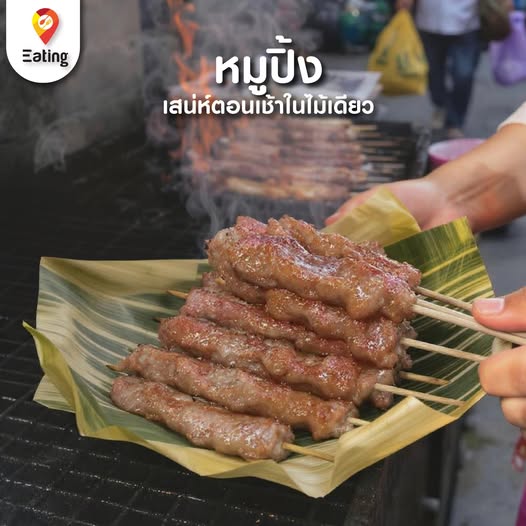
หมูปิ้ง
เสน่ห์ตอนเช้าในไม้เดียว
หมูปิ้ง เสน่ห์ตอนเช้าในไม้เดียว
ทุกเช้าตรู่ในกรุงเทพฯ ไม่ว่าจะเป็นย่านตลาดเก่า หรือริมถนนในย่านสำนักงาน ท่ามกลางเสียงรถติดและผู้คนที่รีบเร่ง คุณอาจได้กลิ่นบางอย่างลอยมาตามลม
.
กลิ่นหมูหมักที่กำลังย่างบนเตาถ่านอุ่นๆ กลิ่นที่หอมหวานแบบไม่ปรุงแต่ง เป็นกลิ่นที่ชวนให้ใจสงบในชั่วขณะหนึ่ง แม้โลกกำลังวุ่นวาย
.
หมูปิ้งเสียบไม้เล็กๆ นี้ อาจดูธรรมดาสำหรับคนที่เติบโตมากับมัน แต่มันคืออาหารที่เต็มไปด้วยรายละเอียดและเรื่องเล่าในทุกคำ ย้อนกลับไปตั้งแต่สมัยก่อน หมูปิ้งไม่เคยหายไปจากท้องถนนไทย ไม่ว่าจะในมือแม่ค้าหน้าปากซอย ในมือเด็กนักเรียนที่กำลังเดินไปโรงเรียน หรือในกล่องอาหารเช้าที่พ่อบ้านแม่บ้านเตรียมให้คนในครอบครัว มันคืออาหารที่ไม่ได้แค่เติมพลัง แต่ยังปลอบประโลมความรู้สึกให้รู้สึกถึงบ้าน
.
หมูปิ้งคือเนื้อหมูหมักที่ผ่านการดูแลใส่ใจในทุกรายละเอียด น้ำหมักที่หอมกลมกล่อมมักประกอบด้วยกระเทียม รากผักชี พริกไทยดำ น้ำตาลปี๊บ และซอสถั่วเหลือง บางสูตรมีนมสด น้ำมันงา หรือแม้แต่น้ำสับปะรดเพื่อให้เนื้อนุ่มละมุน เมื่อหมักอย่างดีแล้วจะถูกเสียบไม้และวางบนเตาถ่าน—ถ่านจริงๆ ที่ต้องรู้จังหวะ รู้ไฟ ต้องหมั่นกลับไม้ไม่ให้ไหม้ และคอยพรมด้วยน้ำหมักเพื่อให้เนื้อชุ่มฉ่ำ ควันจากเตาที่ค่อยๆ ซึมซับเข้าเนื้อกลายเป็นสิ่งที่เงินซื้อไม่ได้ กลิ่นนี้เองที่ทำให้ใครต่อใครหยุดเดิน และแถวของคนรอก็มักจะยาวขึ้นเรื่อยๆ แม้เพิ่งเจ็ดโมงเช้า
.
หมูปิ้งไม่ได้มีแค่รสชาติเดียว หากฟังเสียงถนน คุณจะได้ยินภาษาของหมูปิ้งหลายแบบ หมูปิ้งสูตรอีสานที่ย่างจนขอบไหม้ หอมเค็มแรง เหมาะกินกับข้าวเหนียวหนึบๆ แบบไม่ต้องมีน้ำจิ้ม หมูปิ้งเหนือที่แฝงกลิ่นขมิ้นและสมุนไพร ออกแนวเครื่องแกงนัวๆ หรือหมูปิ้งแบบเมืองกรุงที่หวานละมุน หอมกลิ่นนมและงา เป็นรสกลางๆ ที่ใครกินก็พยักหน้าให้ว่า “ใช่เลย” ยิ่งในยุคนี้ เราเห็นหมูปิ้งคลีน หมูปิ้งคีโต หรือแม้แต่หมูปิ้งฟาร์มออร์แกนิกที่ตอบโจทย์คนรักสุขภาพ แต่ไม่เคยละทิ้งหัวใจสำคัญของมันคือ ความเรียบง่ายและรสชาติที่จริงใจ
.
เมื่อพูดถึงหมูปิ้ง เราจึงไม่ได้พูดถึงแค่อาหาร แต่เรากำลังพูดถึง “ความผูกพัน” ที่อยู่ในวิถีชีวิตคนไทยมาแสนนาน เป็นอาหารที่กินตอนรีบ ก็อร่อย กินตอนมีเวลาก็อุ่นใจ เป็นอาหารที่แม่ซื้อให้ลูกกินก่อนเข้าเรียน เป็นอาหารที่คนรักซื้อให้กันตอนเช้า หรือแม้แต่เป็นอาหารที่เราเคยหยิบขึ้นมากินตอนน้ำตาไหล เพราะมันคือรสชาติที่คุ้นเคยที่สุดในวันที่ไม่มีใคร
.
หมูปิ้งคือรอยยิ้มไม้ละสิบห้าที่ส่งผ่านกันในทุกเช้า แม้ราคาจะขึ้นไปเรื่อย แต่ความอบอุ่นที่มากับมันไม่เคยลดลง ถ้าคุณเป็นนักท่องเที่ยวที่มาเยือนไทยครั้งแรก อย่าเพิ่งรีบไปร้านหรู อย่าเพิ่งมองหาร้านดาวมิชลิน เดินเข้าซอยเล็กๆ ในเช้าตรู่ ลองต่อแถวกับชาวบ้าน ลองกัดหมูปิ้งไม้หนึ่งกับข้าวเหนียวห่อใบตอง คุณอาจไม่รู้จักชื่อคนขาย แต่อาจได้รู้จักหัวใจของคนไทยผ่านหมูไม้เล็กๆ นี้
.
ในประเทศที่แสงแดดแรงและผู้คนยิ้มง่าย อาหารที่ไม่หรูหราแต่อ่อนโยนที่สุด อาจคือสิ่งที่ทำให้คุณอยากกลับมาอีกก็ได้
Grilled Pork Skewers: A Morning Ritual Etched in Thai Life
In the early mornings of Bangkok
whether in the backstreets of an old neighborhood or along the bustling roads near office buildings
amid the honking horns and the rush of daily life, you might catch a familiar scent wafting through the air. It’s the smell of marinated pork gently sizzling over glowing charcoal. Sweet and smoky, it’s the kind of aroma that makes time pause, if only for a moment.
.
Grilled pork skewers, or moo ping, may seem like an ordinary street food to many Thais, but behind each skewer lies a story, a rhythm of life passed down through generations. Long before fancy coffee and breakfast sets arrived in the city, moo ping was already there—nestled in the palms of school children, busy office workers, and market vendors alike. More than just a quick bite, it’s food that comforts, food that feels like home.
.
The essence of moo ping lies in its simplicity. Pork is carefully marinated in a mixture of garlic, coriander root, black pepper, palm sugar, and soy sauce—some recipes add milk, sesame oil, or even pineapple juice to tenderize the meat.
The pork is then skewered and grilled slowly over real charcoal, requiring patience and skill. Vendors must know when to turn the skewers, when to baste them, how to balance the flame just right.
The gentle smoke becomes a silent ingredient, infusing each piece with a flavor that can’t be replicated in any kitchen appliance.
.
But moo ping isn’t just one flavor. If you listen closely, the streets will tell you the diversity of this humble dish. Northeastern-style moo ping tends to be saltier, more intense, with crispy, charred edges. Northern-style versions bring a fragrant touch of turmeric and herbs, rich with traditional curry paste. In Bangkok, you’ll often find a sweeter, milkier version, soft and aromatic. Today, there's also health-conscious variations: sugar-free moo ping, organic farm-raised pork skewers, and even keto-friendly adaptations—each evolving, but still true to the heart of the dish.
To speak of moo ping is to speak of Thai daily life. It’s the food of hurried mornings and quiet comfort. It's what a mother gives her child before school, what a lover picks up for their partner on the way to work. It’s the flavor we reach for on days when everything feels too much, because it tastes like familiarity like something that never lets us down.
.
Moo ping is a small morning joy, often sold at just fifteen baht a stick, but rich in warmth and meaning. Even as prices slowly rise, the comfort it brings remains unchanged. If you're a first-time traveler in Thailand, skip the five-star breakfast for a day. Walk into a small alley at dawn, join the queue with locals, and bite into a skewer of moo ping with warm sticky rice wrapped in banana leaf. You may not know the vendor’s name, but you’ll know something deeper: the heart of Thai hospitality.
.
In a land of blazing sun and gentle smiles, sometimes the most soulful meal isn’t found in a Michelin-starred restaurant—it’s found on a simple stick of grilled pork, right at the corner of the street.