Insider
New Experience
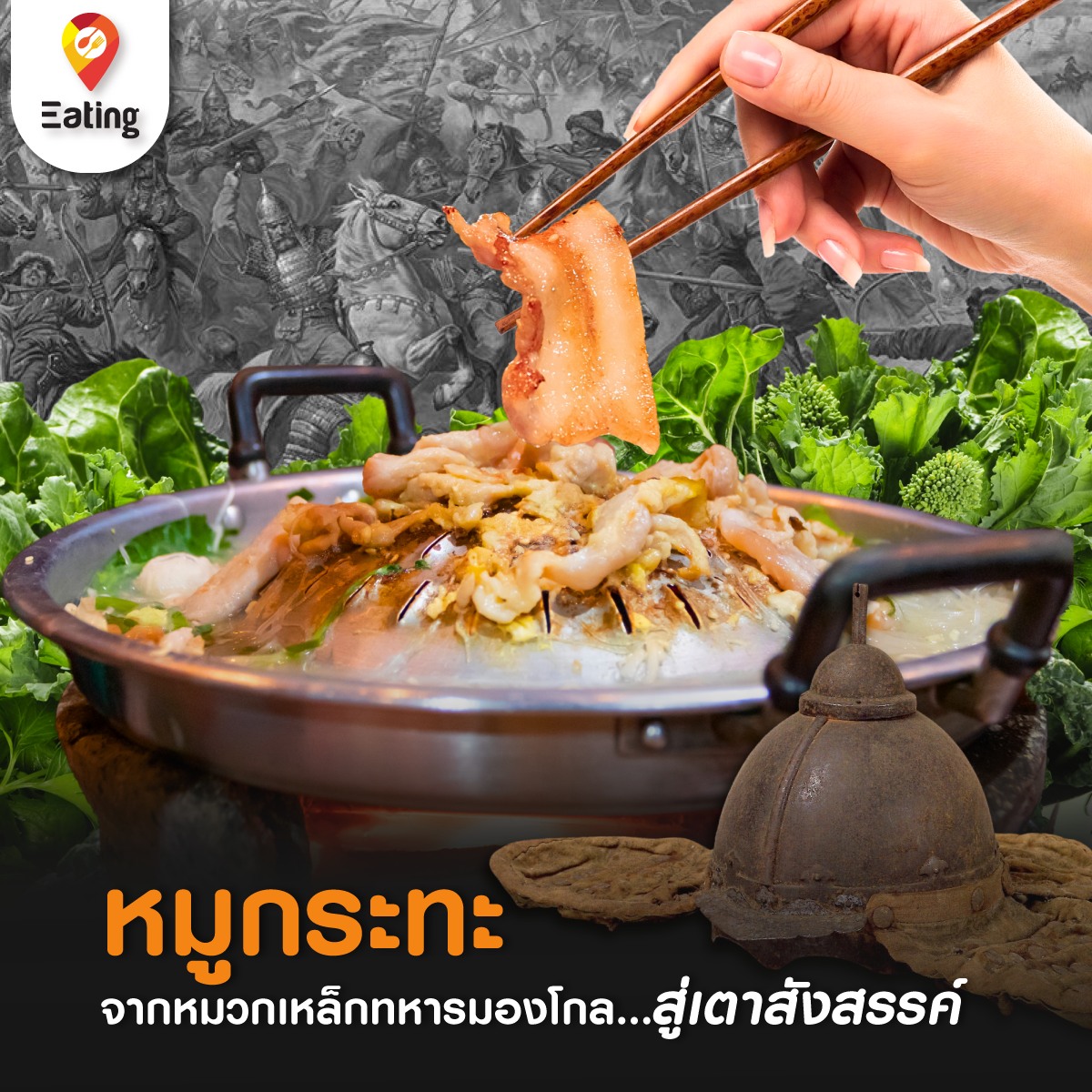
หมูกระทะ
จากหมวกเหล็กทหารมองโกลสู่เตาสังสรรค์
"หมูกระทะ" ไม่ได้เริ่มจากร้านบุฟเฟต์ แต่มาจากหมวกเหล็กทหาร เจงกีสข่าน! 


ㅤ
หลายคนอาจคิดว่า “หมูกระทะ” เป็นของกินที่ไทยคิดขึ้นเองเพื่อความอร่อยและการสังสรรค์ แต่ความจริงแล้ว ต้นกำเนิดของมัน…เต็มไปด้วยเรื่องเล่าทางประวัติศาสตร์ที่น่าสนใจในจักรวรรดิมองโกลเมื่อกว่า 800 ปีก่อน...
--------------
 มองโกล + การทำอาหารด้วยอาวุธ
ในยุค เจงกีสข่าน (Genghis Khan) ก่อตั้งจักรวรรดิมองโกล (ค.ศ. 1206)
ทหารมองโกลเป็นนักรบเร่ร่อน เคลื่อนทัพรวดเร็ว และไม่มีเครื่องครัวติดตัว
พวกเขาใช้ โล่เหล็กหรือหมวกเกราะตั้งไฟ แล้วย่างเนื้อแกะ เนื้อม้า หรือเนื้อวัว กินกันในกองทัพ
ㅤ
วิธีนี้ถูกเล่าขานว่าเป็นแรงบันดาลใจให้เกิดเมนู Mongolian Barbecue (แม้ความจริง “Mongolian BBQ” ที่เรารู้จักจะถูกสร้างขึ้นใหม่ในไต้หวันช่วงปี 1950s แต่ชื่อก็อิงกับตำนานทหารมองโกลยุคศตวรรษที่ 13 นั่นเอง)
--------------
ข้ามมาถึงสงครามโลกครั้งที่ 2 ⇒ มีตำนานเล่าว่าทหารใช้หมวกเหล็กตั้งไฟย่างเนื้อแก้หิว
จากความจำเป็น ⇒ กลายเป็นไอเดียกระทะทรงโค้งที่ทั้งย่างและต้มได้
ㅤ
 ในไทย หมูกระทะเริ่มบูมช่วงปี 2530–2540
กลายเป็นบุฟเฟต์ราคาย่อมเยา จนถูกขนานนามว่า “อาหารสังสรรค์แห่งชาติ” ไม่ว่าเพื่อน ครอบครัว หรือวงเลี้ยง หมูกระทะคือศูนย์รวมของความสุขบนโต๊ะอาหาร
--------------
หมูกระทะจึงไม่ใช่แค่อาหาร แต่เป็นเรื่องเล่าที่ผูกพันกับ สงคราม ความอยู่รอด และวัฒนธรรมร่วมวง ทุกครั้งที่เรานั่งย่างหมูบนกระทะร้อน ๆ …นั่นคือการสืบต่อเรื่องเล่าที่อาจเริ่มตั้งแต่ยุคเจงกีสข่านจนถึงสนามรบสงครามโลก 

“Moo Kratha” didn’t start from buffet restaurants, but from soldiers’ helmets and even traces back to Genghis Khan!
ㅤ
Many people might think that Moo Kratha (Thai-style barbecue) was invented purely for fun gatherings and delicious meals in Thailand.
But in fact, its origins are tied to fascinating historical tales — going back more than 800 years to the era of the Mongol Empire...
ㅤ
Mongols + Cooking with Weapons
During the reign of Genghis Khan (c. 1206), when the Mongol Empire was expanding across Asia into Eastern Europe, Mongol soldiers were nomadic warriors who traveled fast and carried no cookware.
They often used iron shields or helmets as makeshift pans, placing them over fire to grill lamb, horse meat, or beef to feed their army.
ㅤ
This method has long been told as the inspiration behind what we now know as Mongolian Barbecue — even though the modern “Mongolian BBQ” was actually invented in Taiwan in the 1950s, its name still references the legend of Mongol warriors in the 13th century.
ㅤ
From the Battlefield to the Dinner Table
Fast forward to World War II — another tale says that soldiers used their steel helmets to cook meat over open flames.
What began as survival improvisation eventually inspired the domed grill pan that could both grill and boil food at the same time.
ㅤ
In Thailand, Moo Kratha started booming in the late 1980s–1990s.
It became a budget-friendly buffet loved by everyone, earning the title of “the nation’s communal dish.” Friends, families, coworkers — all could gather around one grill, making it the centerpiece of social dining.
ㅤ
 Beyond Just a Meal
Moo Kratha is more than food. It’s a story that connects war, survival, and the culture of sharing.
Every time we gather around a sizzling grill pan, we’re continuing a tradition that might have begun with Mongol warriors and carried on through the battlefields of World War II