Insider
New Experience
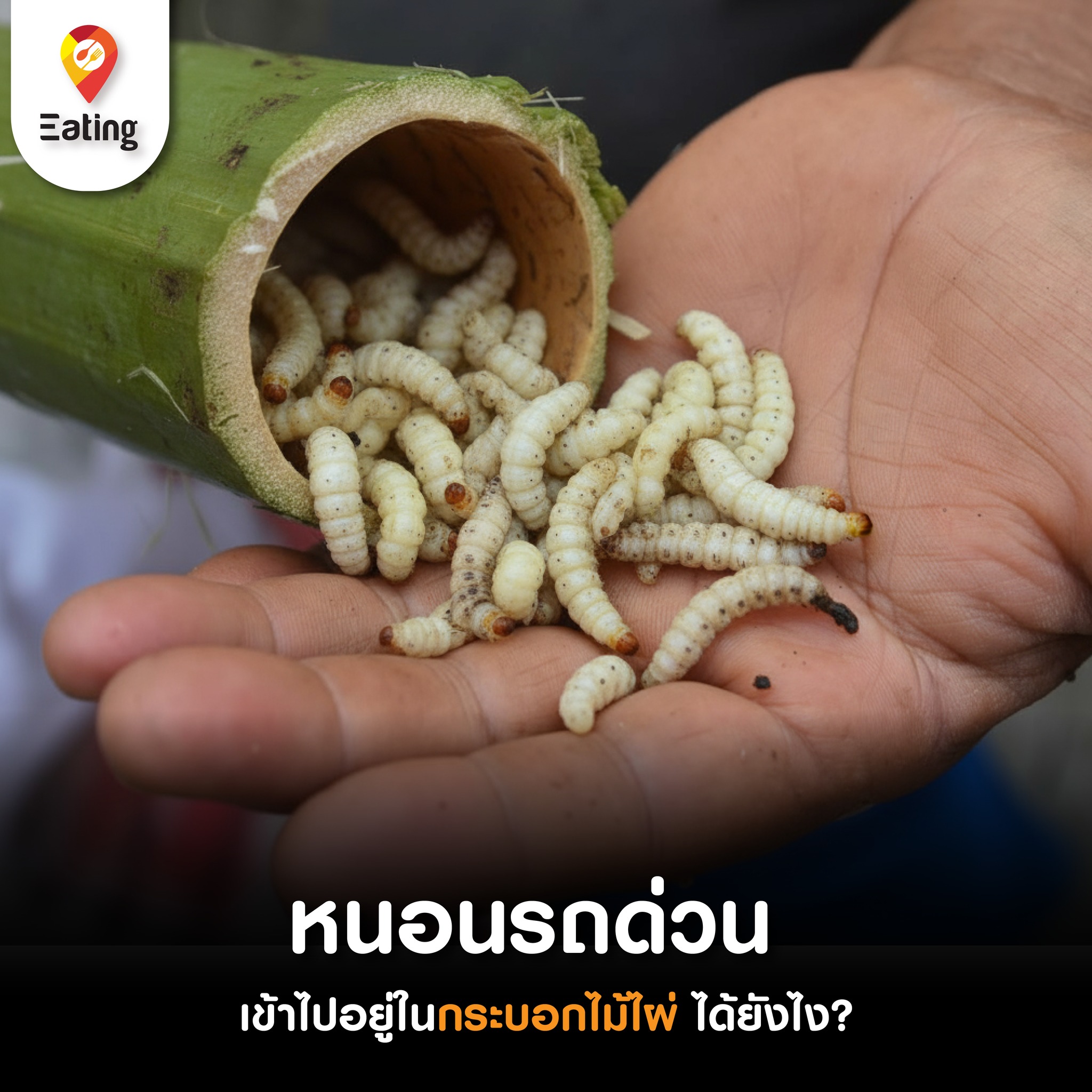
“หนอนรถด่วน”
เข้าไปอยู่ในกระบอกไม้ไผ่ได้ยังไง?
“หนอนรถด่วน” หรือที่คนเหนือเรียกกันติดปากว่า “หนอนรถด่วนไม้ไผ่” เป็นอาหารพื้นบ้านหากินได้ยากในช่วงฤดูฝน และเป็นหนึ่งในของป่าที่ชาวบ้านนิยมล่ากันตามป่าไผ่ หนอนชนิดนี้จริง ๆ แล้วคือ “ตัวอ่อนของด้วงปีกแข็ง”
.
ที่มีชื่อทางวิทยาศาสตร์ว่า Omphisa fuscidentalis หรือที่ฝรั่งเรียกว่า bamboo worm วงจรชีวิตของมันเริ่มจากตัวเต็มวัยที่เป็นด้วงบินออกหากระบอกไม้ไผ่อ่อน เพื่อวางไข่ตามรอยแตกหรือรูเล็ก ๆ ที่อยู่บนปล้องไผ่ เมื่อไข่ฟักออกมาก็จะกลายเป็นตัวหนอนสีขาว ตัวอ้วน ๆ ที่เริ่มแทะกินเนื้อไม้ไผ่ด้านในเป็นอาหาร หนอนจะค่อย ๆ เจาะเข้าไปอยู่ในเนื้อไม้จนเกิดเป็นโพรงยาวภายในกระบอก และอาศัยอยู่ในนั้นตลอดระยะการเจริญเติบโตจนกว่าจะโตเต็มวัย
.
วิธีสังเกตว่าไม้ไผ่กระบอกไหนมีหนอนอยู่ ไม่ได้ใช้แค่ตาเปล่าดูเท่านั้น แต่ใช้ประสาทสัมผัสทั้งหมดของคนที่ชำนาญ หากเคาะหรือเขย่ากระบอกไม้ไผ่เบา ๆ แล้วมีเสียงกรุ๊งกริ๊งคล้ายของกลิ้งอยู่ข้างใน แสดงว่ามีหนอนขยับตัวอยู่ภายใน ส่วนปล้องไม้ที่มีรูเล็กเท่ารูเข็มก็เป็นร่องรอยของจุดวางไข่จากด้วงตัวเมีย หรือบางครั้งจะสังเกตจากสีไม้ไผ่ที่เข้มผิดปกติและเสียงเคาะที่ทึบกว่าปกติ ชาวบ้านมักจะออกหาในช่วงฤดูฝน เพราะเป็นเวลาที่หนอนโตอ้วนสุด มีไขมันเยอะ และรสชาติดีที่สุด
.
หนอนรถด่วนถือเป็นแหล่งโปรตีนจากธรรมชาติที่อุดมไปด้วยไขมันดีและโปรตีนสูง เป็นของป่าที่อยู่คู่กับวิถีคนพื้นถิ่นมาหลายชั่วอายุคน ปัจจุบันนอกจากจะหากินสด ๆ ตามฤดูกาลแล้ว ยังถูกนำมาทอดกรอบขายเป็นของฝากขึ้นชื่อของภาคเหนือ รสชาติของหนอนรถด่วนทอดนั้นมัน หอม และกรอบ คล้ายมันหมูผสมกลิ่นเนย บางคนลองครั้งแรกอาจกล้า ๆ กลัว ๆ แต่ถ้าได้ลองแล้วมักติดใจจนต้องซื้อกลับบ้าน
“Bamboo worms,” known in Northern Thailand as non rot duan mai phai (literally “express train worms”), are a rare seasonal delicacy found mostly during the rainy season. They’re one of the forest’s edible treasures that locals hunt for in bamboo groves. Despite the name, these “worms” are actually the larvae of a beetle species scientifically known as Omphisa fuscidentalis, or what foreigners call the “bamboo worm.”
Their life cycle begins when the adult beetles fly out in search of young bamboo culms to lay their eggs, usually inside small cracks or holes on the bamboo’s surface. Once hatched, the larvae fat, white, and soft-bodied start feeding on the inner fibers of the bamboo. Over time, they burrow deeper into the stalk, creating long tunnels inside and living there until they reach maturity.
To spot which bamboo stems contain worms, locals rely on more than just eyesight they use all their senses. By gently tapping or shaking the bamboo, experienced foragers can hear a faint rattling sound from the moving larvae inside. Tiny pinholes on the bamboo’s surface often mark the beetles’ egg laying spots, while darker coloration or a duller tapping sound can also indicate the worms’ presence. The best time to collect them is during the rainy season, when the worms are plump, rich in fat, and at their tastiest.
Bamboo worms are a natural source of protein and healthy fats, long valued as a traditional food by rural communities. Today, they’re not only eaten fresh in season but also fried until golden and crispy to be sold as a famous Northern snack. Their taste is surprisingly rich nutty, buttery, and slightly meaty, reminiscent of fried pork fat. Though first-timers may hesitate, one bite is often enough to turn curiosity into craving.