Insider
New Experience
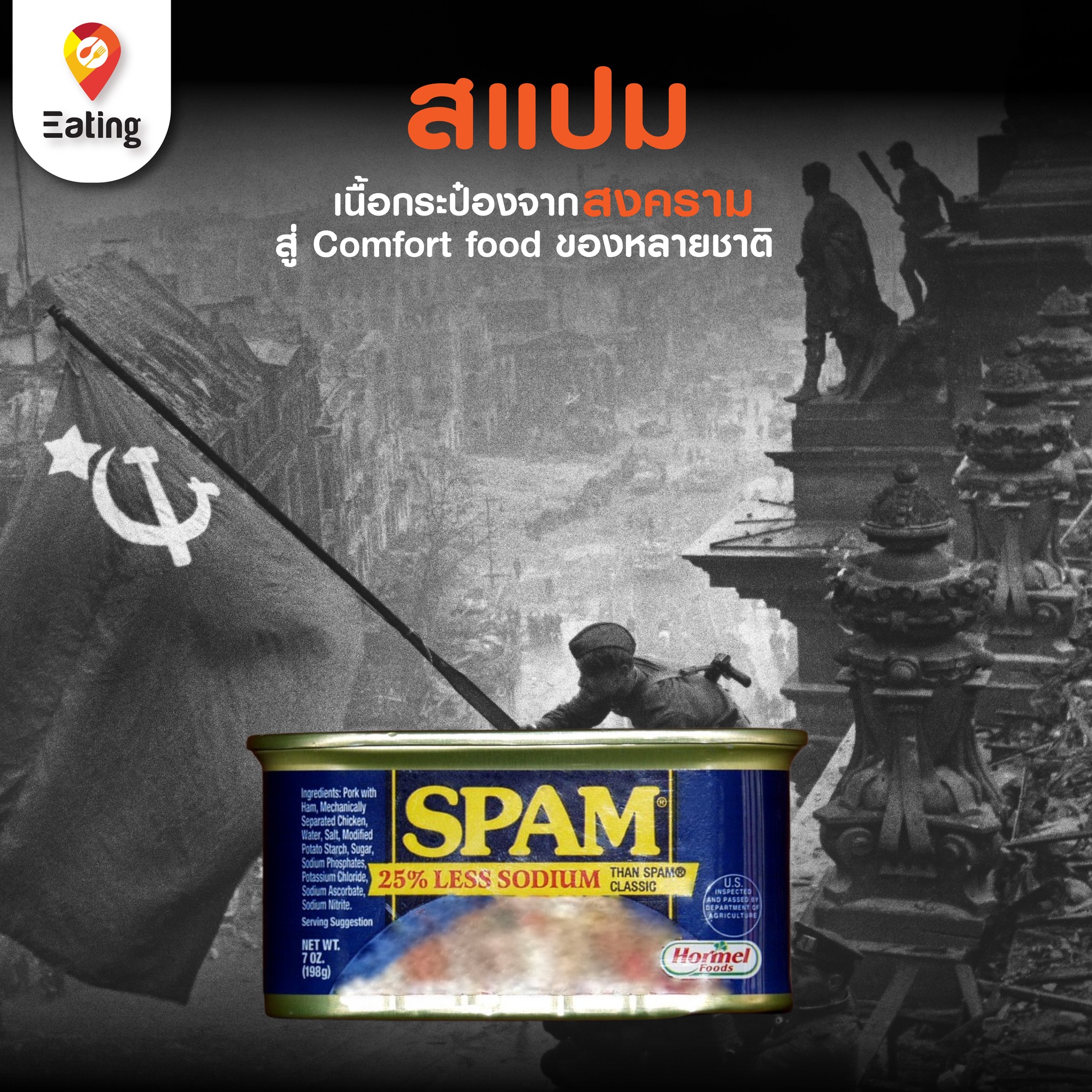
เนื้อกระป๋องจากสงคราม
สู่ComfortFoodของหลายชาติ
สแปมเนื้อกระป๋องจากสงคราม สู้ Comfort food ของหลายชาติ
เสียงเปิดฝากระป๋องโลหะเบา ๆ ดังขึ้นท่ามกลางสมรภูมิที่เต็มไปด้วยเสียงปืนและควันไฟ
สิ่งที่อยู่ข้างในไม่ใช่กระสุนหรือเสบียงชิ้นใหญ่ แต่คือ Spam — เนื้อกระป๋องที่กลายเป็นสัญลักษณ์แห่งการอยู่รอดในสงครามโลกครั้งที่สอง
.
ย้อนกลับไปในปี ค.ศ. 1937 บริษัท Hormel Foods ในสหรัฐอเมริกา เปิดตัวผลิตภัณฑ์เนื้อกระป๋องใหม่ภายใต้ชื่อ “Spam” ซึ่งเชื่อกันว่ามาจากคำว่า Spiced Ham หรือ Shoulder of Pork and Ham จุดเด่นของมันคือ ใช้เนื้อส่วนหัวไหล่หมูบดผสมกับแฮม ปรุงรสด้วยเกลือ น้ำตาล และสารกันเสีย ทำให้เก็บได้นานโดยไม่ต้องแช่เย็น ราคาย่อมเยา และเปิดกินได้ทันที
.
ไม่นานนัก สงครามโลกครั้งที่สองก็ปะทุขึ้น และ Spam ถูกส่งเข้าสู่แนวหน้าเป็นเสบียงหลักของทหารอเมริกันและพันธมิตร — อาหารที่สามารถพกพาไปได้ทุกสนามรบ ไม่ว่าจะในป่าฝนเขตร้อนหรือทะเลทรายแห้งแล้ง ข้อมูลบันทึกไว้ว่า ช่วงสงครามมีการส่ง Spam กว่าร้อยล้านกระป๋องไปยังทหารทั่วโลก
.
บนโต๊ะหินที่ก่อขึ้นอย่างเร่งรีบ ทหารหนุ่มนั่งเปิดกระป๋อง Spam แล้วตักเข้าปากด้วยช้อนเหล็ก แม้จะไม่ใช่อาหารหรู แต่เนื้อหมูเค็ม ๆ มัน ๆ ในกระป๋องเล็ก ๆ กลายเป็นความสุขเพียงไม่กี่อย่างที่พอจะหาได้ในสนามรบ วินสตัน เชอร์ชิล อดีตนายกรัฐมนตรีอังกฤษ ถึงกับกล่าวว่า “Spam ช่วยให้เราเอาชนะสงครามได้”
.
เมื่อสงครามสิ้นสุดลง Spam ไม่ได้หายไปกับเสียงปืน แต่ยังคงอยู่ในความทรงจำและวิถีชีวิตของผู้คน ประเทศที่เคยมีทหารอเมริกันประจำการ เช่น ญี่ปุ่น เกาหลีใต้ ฟิลิปปินส์ และฮาวาย ต่างนำ Spam มาดัดแปลงเป็นเมนูพื้นบ้าน เช่น Spam Musubi ของฮาวาย — ข้าวห่อสาหร่ายโปะด้วย Spam ชิ้นหนา หรือ บูแดจิเก ของเกาหลี — สุกี้กองทัพที่รวม Spam เข้ากับบะหมี่และกิมจิ
.
Spam จึงไม่ใช่เพียงอาหารกระป๋องธรรมดา แต่คือเรื่องเล่าทางประวัติศาสตร์ที่สะท้อนถึง ความอดทน ความอยู่รอด และความสามารถในการปรับตัวของมนุษย์ จากเสบียงในสนามรบ สู่เมนูที่หลายคนยังคงเรียกหาในครัวเรือนจนถึงปัจจุบัน
.
 Spam เนื้อกระป๋องเล็ก ๆ ที่หล่อเลี้ยงชีวิตผู้คนนับล้าน และยังคงบอกเล่าเรื่องราวของสงครามโลก ผ่านรสชาติที่ไม่เคยเลือนหาย
The Canned Meat That Fed the World at War
The soft clink of a tin being opened echoed across the battlefield, a stark contrast to the roar of gunfire and the haze of smoke.
Inside wasn’t ammunition or vital supplies, but Spam — the canned meat that became a symbol of survival during World War II.
In 1937, Hormel Foods in the United States introduced a new canned meat product under the name Spam. The name is believed to come from Spiced Ham or Shoulder of Pork and Ham. It was made from ground pork shoulder blended with ham, seasoned with salt, sugar, and sodium nitrite to preserve its color and freshness. It was cheap, long-lasting, and could be eaten straight from the tin — no refrigeration required.
Not long after, the world was at war. Spam became a staple ration for American and Allied soldiers — a food that could be carried into every battlefield, from the humid jungles of the Pacific to the barren deserts of North Africa. Records note that during the war, more than 100 million cans of Spam were shipped to troops around the world.
On makeshift stone tables, young soldiers sat opening cans of Spam, eating with battered metal spoons. It wasn’t luxurious, but that salty, meaty bite from a small tin was a rare comfort amid the chaos of war. Winston Churchill even remarked, “Spam was a war-time delicacy that helped us win the war.”
When the guns finally fell silent, Spam didn’t disappear. Instead, it remained in the lives and memories of people worldwide. In countries once occupied by U.S. troops — like Japan, South Korea, the Philippines, and Hawaii — Spam was woven into local cuisines. Today, it stars in dishes such as Spam Musubi in Hawaii — a block of rice topped with grilled Spam and wrapped in seaweed — and Budae Jjigae in Korea, a hearty “army stew” with noodles, kimchi, and Spam slices.
Spam, then, is not just a canned meat. It is a piece of living history — a reminder of endurance, survival, and human resilience. From a soldier’s ration on the frontlines to a beloved household dish, Spam continues to tell the story of the war through a taste that has never faded.
Spam — a small can of meat that nourished millions, carrying with it the untold stories of a world at war.